
The Space Race on Wall Street: What a SpaceX Floating Means for Investors
For years, the financial world has whispered about Elon Musk taking SpaceX public. But would listing the world’s most famous rocket company on the stock market simply be another technology listing? Marc EL-LAZIDI, Chief Investment Officer at Jesmond Mizzi Financial Advisors, breaks down the high-stakes battle between the fast-moving US private space industry and Europe’s traditional state-backed approach.
Would taking SpaceX public simply be another company going public, or does it mark a fundamental shift in how we think about space?
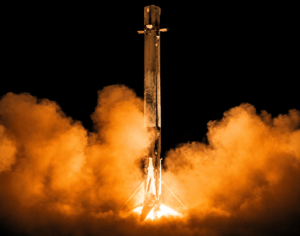
A SpaceX stock market debut would be much more than just another high-growth technology company listing its shares. It would be the exact moment the public markets are asked to put a price tag on a piece of essential global infrastructure. Today, SpaceX completely dominates the business of sending payloads into orbit. They do this using their reusable Falcon 9 rocket, flying around a hundred missions a year and drastically undercutting almost all rivals on cost.
What makes SpaceX unique is how their whole business links together. They have the Falcon 9, a massive new rocket called Starship in development, and their own built-in customer: Starlink, their network of internet satellites. Starlink soaks up a huge amount of SpaceX’s own launch capacity, keeping their factories running at maximum speed.
How would you describe the American business model for rocket companies, where SpaceX and rivals like Rocket Lab and Firefly operate?
The American model is a unique hybrid. It blends high-risk Silicon Valley venture capital with heavy government backing via Pentagon and NASA contracts. Companies like SpaceX were seeded with a mix of private investment and public money. However, they are ultimately expected to compete on price, speed and innovation. They cannot survive forever on government handouts. SpaceX’s strategy of using reusable rockets is the perfect example of this. By landing and reusing their Falcon 9 boosters, they slash the cost of every flight.
Meanwhile, competitors are finding their own niches. Rocket Lab built its reputation on launching smaller satellites frequently and is now developing a larger rocket to offer full-service satellite packages. Another competitor, Firefly, focuses on quick turnaround launches tailored to the needs of military and intelligence agencies.
The common thread is that all these American firms must demonstrate to private investors that they can be profitable without permanent state financial rescue, even though the government remains their biggest customer.
Europe also spends heavily on space. How does the European model differ from this fast-paced American approach?
Europe has chosen a very different path. It views space travel as a strategic public service rather than a profit-making business. Europe’s flagship rocket, the Ariane 6, costs roughly $70 million to $115 million per flight. Because it is fully disposable, meaning the rocket burns up in the atmosphere after a single use, its cost per kilogram is significantly higher than SpaceX’s Falcon 9. Yet, European governments heavily support it because they believe that having guaranteed, independent access to space is far more important than winning a price war. The European business model is built entirely around government missions such as Europe’s Galileo navigation satellites, climate satellites, and classified military payloads.
Why is Europe finding it so hard to break its dependence on Elon Musk, despite spending billions of euros?
The uncomfortable truth is that Europe built a rocket using outdated ideas that arrived a decade too late. When the Ariane 6 rocket was originally approved, European decision-makers explicitly chose a disposable design, dismissing reusable rockets as unrealistic. By the time SpaceX proved that reusable rockets actually worked, the design of Ariane 6 was locked in, leaving it permanently more expensive to run. Meanwhile, Europe lacks an internal customer like Starlink to justify launching rockets every week. Because European government demand is steady but low, there are no large-scale projects to keep factories busy and help engineers learn through high-volume production.
Add to this political complexity and a conservative risk culture, and the result was predictable: when European rockets are delayed or fully booked, European operators quietly swallow their pride and book a ride on a SpaceX rocket instead.
Finally, for a European investor, how should one approach the space industry today?
First, European investors need to realise that this is not just about rockets; it is about where national defence, telecommunications, global data and politics collide.
In the US, there are already ways to invest in this ecosystem through publicly traded companies such as Rocket Lab and major aerospace corporations, as well as specialised space-themed investment funds. In Europe, direct investment opportunities in rocket companies are very limited. For an investor, the most prudent approach is to treat the space sector as a small, specialised addition to a well-diversified portfolio. Investors must clearly understand that the US model offers much higher growth and innovation, while the European model offers stability and state backing, but far less financial agility.
This article does not intend to constitute an offer or agreement to buy or sell investments or give investment advice and the contents therein should not be construed as such. Investors should remember that past performance is no guide to future performance and that the value of investments may go down as well as up. The company is licensed to conduct investment services by the MFSA under the investment services act and is a member of the Malta Stock Exchange. The directors or related parties, including the company and their clients, are likely to have an interest in securities mentioned in this article. For more information, contact Jesmond Mizzi Financial Advisors Ltd of 16 Central Business Hub, Mdina Road, Attard ATD9036 on 21224410, or e-mail [email protected].